Indoor Cat Enrichment: DIY Toys, Play & Home Setup
Enrichment Ideas for Indoor Cats: DIY Toys, Play Routines, and a Cat-Friendly Home
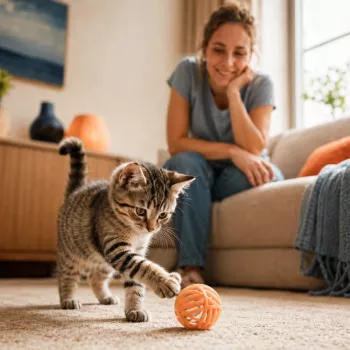
Indoor cats thrive when their day includes hunting-like play, climbing and scratching, problem-solving for food, and cozy recovery spots. A simple enrichment plan can reduce boredom behaviors (like midnight zoomies or excessive meowing), support healthy weight, and build confidence—without turning the home into a pet obstacle course.
What “enrichment” really means for an indoor cat
Enrichment is less about “keeping a cat busy” and more about meeting species-level needs in safe, home-friendly ways. The best plans mix movement, thinking, and calm so your cat can cycle through energy and recovery naturally.
- Meet core needs: stalk-chase-pounce play, climb-and-perch access, scratch-and-scent marking, mouth-safe textures, and restful hiding spots.
- Balance stimulation with recovery: short bursts of play paired with calm routines help prevent overstimulation.
- Use variety and rotation: swap one element every few days (toy type, play location, puzzle difficulty) to keep novelty high.
- Watch individual preferences: some cats prefer ground “prey,” others love feather flyers; shy cats need slower, gentler introductions.
For deeper behavior context, the American Association of Feline Practitioners has practical guidance on feline needs and stress reduction: AAFP Feline Behavior Guidelines.
DIY enrichment toys using everyday items
You don’t need a closet full of gadgets to create satisfying enrichment. A few household items—used thoughtfully—can mimic prey movement, create “ambush” opportunities, and add gentle problem-solving.
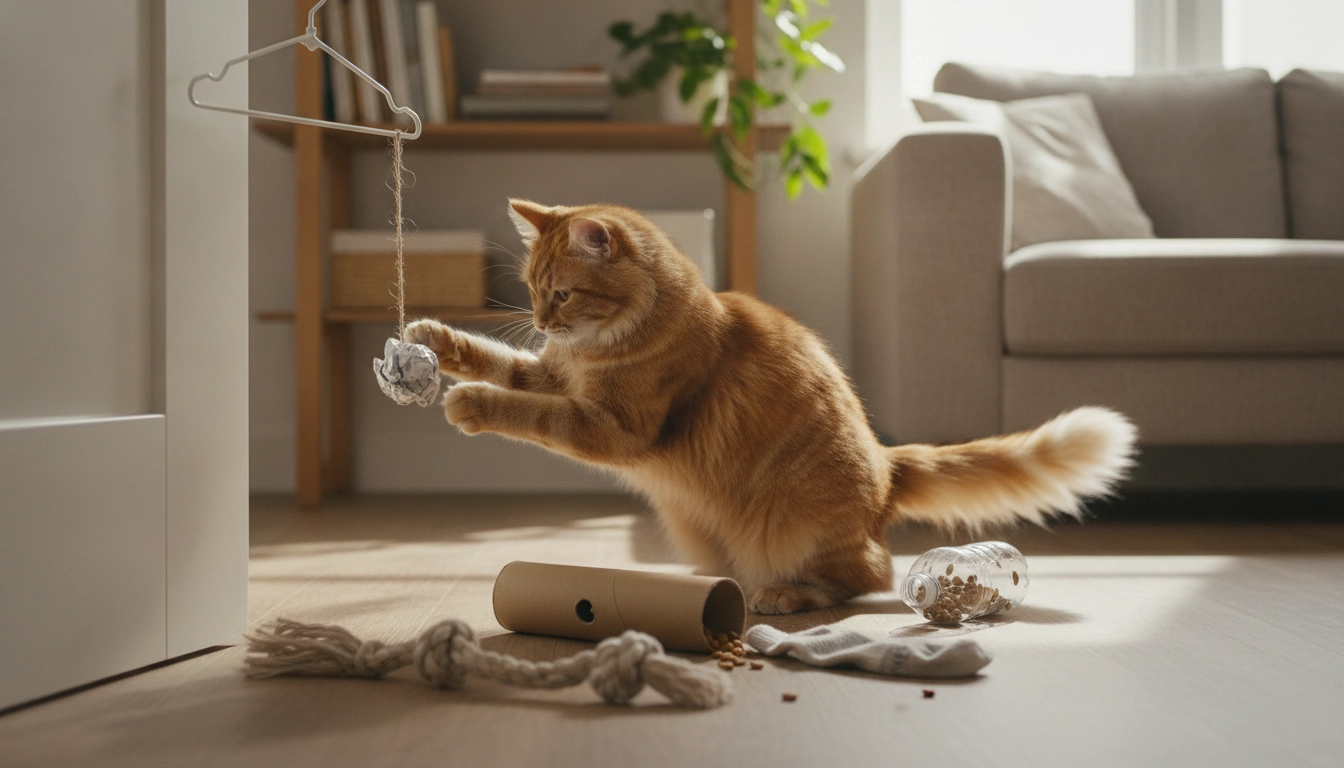
- Paper “prey” toss: crumple printer paper or brown packing paper into balls; great for batting and chasing on hard floors.
- Cardboard box “ambush” fort: cut 2–3 entry holes, add tissue paper or paper strips, and hide a toy inside for discovery.
- Toilet-paper-roll treat tube: fold one end, add a few kibble pieces, fold the other end; supervise cats who chew aggressively.
- Sock kicker (no loose strings): fill a clean sock with fabric scraps and tie a tight knot; offer for bunny-kicks.
- Ice cube “lick enrichment” (cat-safe): freeze a small amount of diluted tuna water (no onions/garlic) for hot days; keep portions small for sensitive stomachs.
| DIY idea | Setup time | Mess level | Best for | Safety note |
|---|---|---|---|---|
| Crumpled paper balls | 1 min | Low | Chasers and swatters | Remove staples/tape; replace when soggy |
| Cardboard ambush box | 5–10 min | Medium | Shy cats and hunters | Smooth sharp edges; remove small loose bits |
| TP-roll treat tube | 2–3 min | Low | Food-motivated cats | Supervise if shredding; discard wet cardboard |
| Sock kicker | 3–5 min | Low | Kickers and wrestlers | No ribbon/strings; wash/replace as needed |
| Frozen lick cube | 2 min + freeze | Low | Lickers and heat relief | Use small portions; avoid salty additives |
Daily play routines that mimic a successful hunt
Most indoor cats do better with multiple short “mini hunts” than one long workout. The goal is to recreate the rhythm of a natural cycle: search, chase, capture, then recover.
- Aim for 2–3 short sessions daily (about 5–12 minutes each) instead of one marathon.
- Use the hunt sequence: stalk (slow lure) → chase (bursts) → pounce (let your cat “win”) → snack/meal to finish.
- Rotate toy styles: wand toy one session, ground skitter toy next, then a puzzle feeder later.
- Single-cat homes: keep predictable “appointment play” times (often morning and evening work best).
- Multi-cat homes: try parallel play in separate zones to reduce competition and resource guarding.
If you want a simple way to keep sessions consistent week to week, the Printable Cat Enrichment Guide: DIY Toys, Play Routines, and Home Tips organizes routines, rotation ideas, and room-by-room setup into one easy reference.
Food puzzles and foraging without overfeeding
Food enrichment works best when it increases activity without increasing calories. Keep your cat’s daily amount measured, then change how it’s delivered.
- Split a measured daily portion into small “foraging” stashes around the home.
- Start easy: open-topped puzzles or scatter feeding, then increase difficulty weekly.
- Use vertical foraging: place a puzzle on a stable shelf or cat tree platform to add climbing.
- Wet-food households: use slow-feeding mats or spread a thin layer on a lick mat that’s easy to sanitize.
- If weight loss is a goal: keep calories the same; increase time and movement by changing delivery method.
For more environmental enrichment ideas backed by feline welfare research, explore: International Cat Care (iCatCare) Advice.
Set up a cat-friendly home in small spaces
Even in an apartment or a smaller home, a few strategic changes can make the space feel “bigger” to a cat—especially when you add vertical options and predictable rest areas.
To make setup easier, pair enrichment changes with better communication: the Cat Body Language & Behavior Cheat Sheet helps you spot stress signals early (like tail flicking, sudden biting, or “freeze and stare”), so you can adjust intensity and spacing before problems build.
A printable plan to stay consistent (and keep boredom away)
When to simplify and talk to a vet
Additional practical tips on enrichment and safe play can be found at: ASPCA Cat Care.
Compare related options such as Memory Boost Worksheets for Students & Adults | Printable Digital Download | Brain Training eBook, Memory Techniques, Study & Recall Tools to match features, dimensions, and use case before choosing.
FAQ
What are some easy DIY ideas for cat enrichment?
Quick options include crumpled paper balls, a cardboard “ambush” box, a TP-roll treat tube, a sock kicker (no strings), and small frozen lick cubes made with diluted tuna water. Skip ribbons, rubber bands, or small parts that can be swallowed, and supervise any toy your cat likes to shred.










Leave a comment