Decode Cat Body Language: Tails, Ears, Postures & Meows
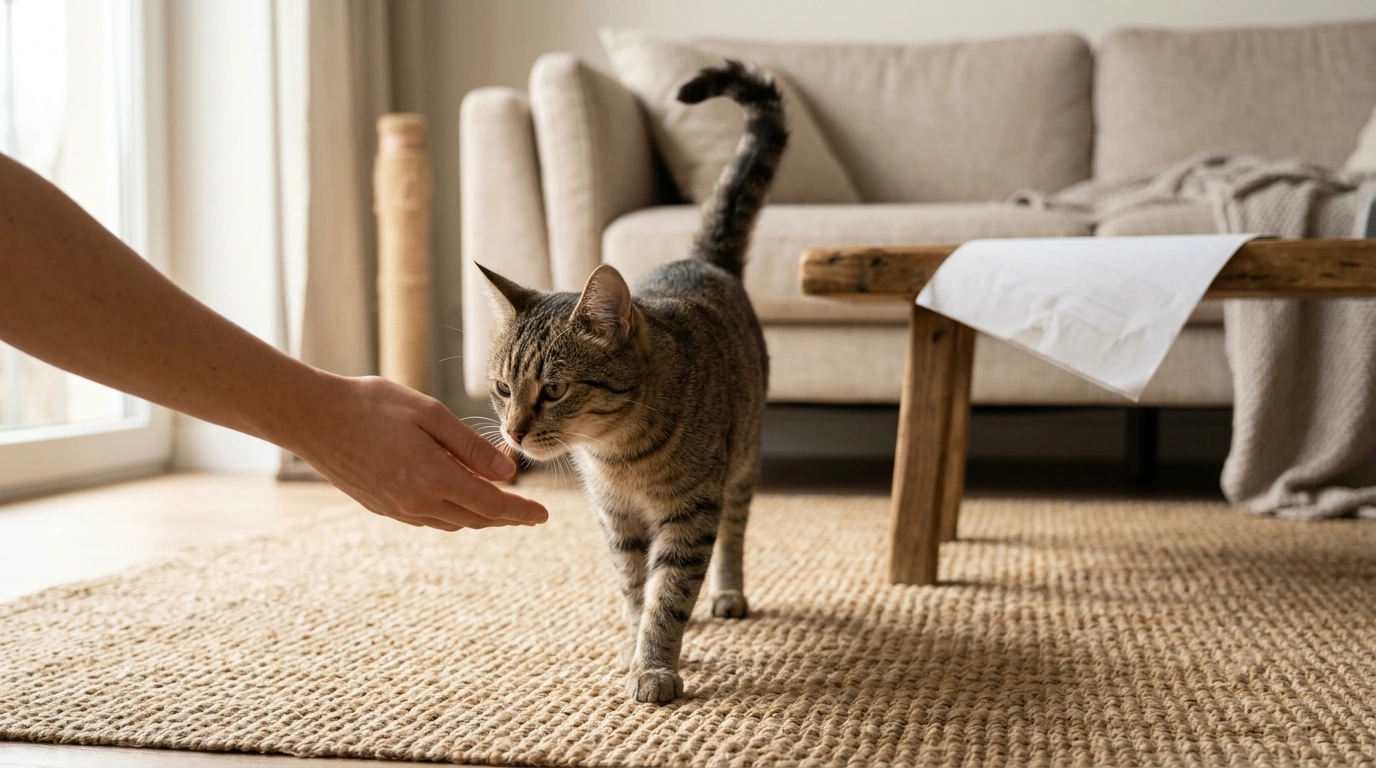
Cat Body Language & Behavior Cheat Sheet: Signals, Postures, and Meows Made Clear
Cats communicate constantly through posture, tail and ear position, facial tension, movement patterns, and voice. Learning a few reliable patterns helps prevent scratches, reduce stress, and build trust—especially in new homes, multi-cat households, or during routine handling like brushing and nail trims.
How cats communicate: the full “message”
A cat’s “meaning” is rarely one signal in isolation. The most accurate read comes from combining what you see, when you see it, and how close you are.
- Look for clusters of cues: tail + ears + eyes + body tension usually tells more than any single signal.
- Context changes meaning: the same meow or posture can mean different things at dinner time vs. at the vet.
- Distance matters: a cat that chooses to approach is often more comfortable than one that stays frozen or retreats.
- Respect thresholds: subtle stress signs often appear before hissing, swatting, or biting.
For deeper background on common behavior issues and what they can signal, see guidance from Cornell Feline Health Center and International Cat Care.
Relaxed vs. stressed: quick visual checkpoints
Relaxed
- Loose muscles, soft face, normal breathing
- Smooth movements, casual stretching
- Tail carried neutrally or gently upright
Mild stress
- Pausing more than usual; low body posture
- Quick head turns; grooming “out of place” (sudden licking)
- Tucked paws, crouching, hesitation before moving
High stress
- Frozen posture, hiding, or frantic retreating
- Dilated pupils with a tense face; ears sideways/back
- Growling, lunging, swatting, or repeated hissing
Overstimulation during petting
- Skin twitching; rippling back muscles
- Tail thumping or fast twitching
- Sudden head turn toward the hand (a common “last warning”)
Ears, eyes, whiskers: the face tells the mood
- Ears forward and swiveling: curious, engaged, tracking sounds.
- Ears sideways (“airplane ears”) or pinned back: worried, defensive, or overstimulated—pause contact and give space.
- Slow blinks: friendly and calm; returning a slow blink can reduce tension.
- Wide eyes + dilated pupils: excitement, fear, pain, or low light—check context and overall posture.
- Whiskers forward: interest or hunting focus; whiskers pulled back/flat: tension or discomfort.
If a cat’s face looks “tight” (flattened whiskers, pinned ears, unblinking stare), treat it like a yellow light—stop advancing and let the cat decide what happens next.
Tail language: friendly, conflicted, or “back off”
- Tail up with a gentle curve at the tip: greeting and comfort; often safe to offer a hand for sniffing.
- Tail wrapped around body while sitting: cautious or self-soothing, especially in new environments.
- Tail low or tucked: fear or uncertainty; avoid looming and give a clear exit route.
- Tail twitching or thumping: agitation or overstimulation; stop petting and let the cat reset.
- Puffed tail: alarm or intense arousal; increase distance and reduce triggers.
Common feline signals and what to do next
| Signal cluster | What it often means | Helpful human response |
|---|---|---|
| Tail up + soft eyes + loose body | Friendly, comfortable | Offer a calm greeting, let the cat approach, pet briefly if welcomed |
| Ears sideways + tail thump + tense body | Overstimulated or annoyed | Stop touching, pause play, give space and quiet |
| Crouched low + tucked tail + dilated pupils | Fearful, unsure | Reduce noise, avoid reaching over, provide hiding spots and a clear escape route |
| Stiff body + hard stare + ears back | Defensive, may escalate | Back away slowly, do not corner, redirect with distance and time |
| Kneading + purring + relaxed posture | Comfort/soothing (usually) | Allow gentle interaction; watch for sudden overstimulation if petting continues |
| Head rubs/cheek bunting | Affiliation, scent marking | Let the cat initiate; respond with gentle contact on cheeks/head if desired |
Body postures: confidence, play, fear, and aggression
- Confident stance: upright, weight evenly distributed, moving normally, exploring with pauses.
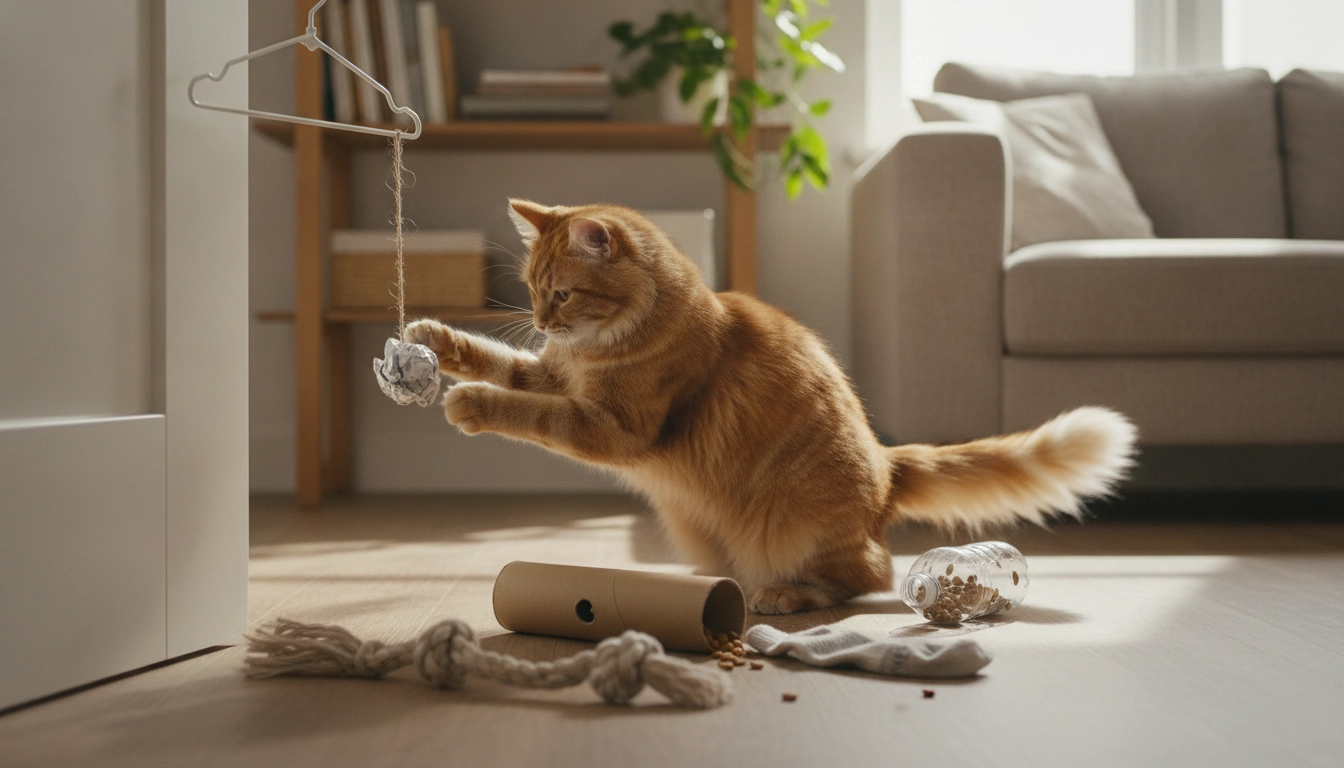
- Play posture: bouncy movements, side hops, short bursts of running, “play face,” brief pauses to re-engage.
- Ambivalent/conflicted: approaching then retreating, grooming suddenly, half-crouch with tail motion.
- Fearful posture: crouched, minimized body, hiding, freezing, or backing away.
- Defensive posture: arched back, puffed fur, sideways presentation, hissing—distance is the safest de-escalation tool.
Meows, purrs, and other sounds: what they can mean
- Short meows: greeting, attention, or a request; patterns often become predictable around routines.
- Repeated or louder meows: urgency, frustration, or learned behavior for food/door opening.
- Chirps/trills: friendly acknowledgment, excitement, or “follow me.”
- Purring: often contentment, but can also occur with stress or pain; confirm with posture and behavior.
- Growling/yowling/hissing: clear discomfort or warning; stop interaction and increase space.
For more on common cat behavior concerns, the ASPCA’s cat behavior resources can help you compare what you’re seeing to typical patterns.
Everyday situations: matching signals to the moment
Using a printable cheat sheet at home
If you want a quick reference you can post on the fridge or keep by the carrier, see the Cat Body Language & Behavior Cheat Sheet (Printable).
For calmer routines on your end (especially during introductions, vet prep, or nail trims), consider pairing it with Break the Tension: Stress Relief Techniques to help keep handling slow, steady, and consistent.
When behavior signals may be medical
FAQ
What does it mean when a cat’s tail is twitching while being petted?
Tail twitching or thumping during petting often signals rising irritation or overstimulation. Pause contact, give the cat a choice to re-engage, and watch for other tension cues like ears turning back, skin twitching, or a head turn toward your hand.
Does purring always mean a cat is happy?
No—purring commonly shows comfort, but some cats also purr when stressed, in pain, or self-soothing. Check the full picture (posture, appetite, hiding, and recent changes) to interpret it correctly.
How can play be told apart from aggression between cats?
Play usually looks loose and bouncy, with role reversals and brief breaks. Aggression tends to be stiff and silent at first (hard staring, blocking, cornering) and may escalate to prolonged yowling; interrupt calmly and separate if either cat can’t disengage.











Leave a comment